

Hey there! As a supplier of ultrasonic probes, I've seen firsthand how these nifty devices are revolutionizing the oil and gas industry. Ultrasonic probes are like the unsung heroes, quietly working behind the scenes to ensure everything runs smoothly. In this blog, I'm gonna share some of the key applications of ultrasonic probes in this industry.
Pipeline Inspection
One of the most critical applications of ultrasonic probes in the oil and gas industry is pipeline inspection. Pipelines are the lifelines of the industry, transporting oil and gas over long distances. However, they are constantly exposed to various factors that can cause damage, such as corrosion, erosion, and mechanical stress.
Ultrasonic probes can be used to detect these defects in pipelines. For example, a Single - element Straight Beam Probe can be used to measure the thickness of the pipeline wall. By sending ultrasonic waves through the pipeline wall and measuring the time it takes for the waves to bounce back, we can accurately determine the wall thickness. If the wall thickness is below a certain threshold, it could indicate corrosion or erosion, which requires immediate attention.
Another type of probe, the Dual - element Straight Beam Probe, is also useful for pipeline inspection. This probe has two elements - one for sending ultrasonic waves and the other for receiving them. It can be used to detect internal defects, such as cracks, in the pipeline. The ultrasonic waves can penetrate the pipeline wall and reflect off any internal defects, allowing us to identify and locate them.
Tank Inspection
Oil and gas storage tanks are another crucial part of the industry. These tanks need to be regularly inspected to ensure their integrity and prevent leaks. Ultrasonic probes play a vital role in tank inspection.
With the help of ultrasonic probes, we can detect corrosion and other defects on the tank walls. For instance, the TOFD (Time - of - Flight Diffraction) technique, which uses TOFD Probe And Wedges For Ultrasonic Testing, is very effective in detecting flaws in tank welds. TOFD works by measuring the time it takes for ultrasonic waves to travel between two probes and detecting any diffraction signals caused by defects. This method can accurately detect and size defects in the welds, helping to ensure the safety of the storage tanks.
Wellbore Integrity Assessment
Wellbores are used to extract oil and gas from underground reservoirs. Maintaining the integrity of wellbores is essential to prevent leaks and ensure efficient production. Ultrasonic probes are used to assess wellbore integrity in several ways.
They can be used to detect casing damage. The casing is a steel pipe that lines the wellbore and provides structural support. Over time, the casing can be damaged due to factors like mechanical stress, corrosion, and formation movement. Ultrasonic probes can be lowered into the wellbore to inspect the casing. By analyzing the ultrasonic signals, we can detect any cracks, holes, or thinning of the casing wall.
In addition, ultrasonic probes can also be used to evaluate the cement bond between the casing and the surrounding rock formation. A good cement bond is necessary to prevent fluid migration between different zones in the wellbore. Ultrasonic logging tools, which use ultrasonic probes, can measure the acoustic impedance of the cement and determine the quality of the cement bond.
Flow Measurement
Accurate flow measurement is crucial in the oil and gas industry for billing, production optimization, and process control. Ultrasonic probes are increasingly being used for flow measurement in pipelines.
Ultrasonic flow meters use the principle of the Doppler effect or transit - time measurement. In Doppler - based ultrasonic flow meters, ultrasonic waves are sent into the flowing fluid. Particles or bubbles in the fluid scatter the ultrasonic waves, and the frequency shift of the scattered waves is measured. This frequency shift is proportional to the fluid velocity, allowing us to calculate the flow rate.
Transit - time ultrasonic flow meters work by measuring the time it takes for ultrasonic waves to travel upstream and downstream in the fluid. The difference in transit times is related to the fluid velocity, and from this, the flow rate can be determined. Ultrasonic flow meters are non - intrusive, which means they don't require cutting into the pipeline, making them easy to install and maintain.
Material Testing
Before using materials in the oil and gas industry, it's important to test their quality and properties. Ultrasonic probes are used for material testing to ensure that the materials meet the required standards.
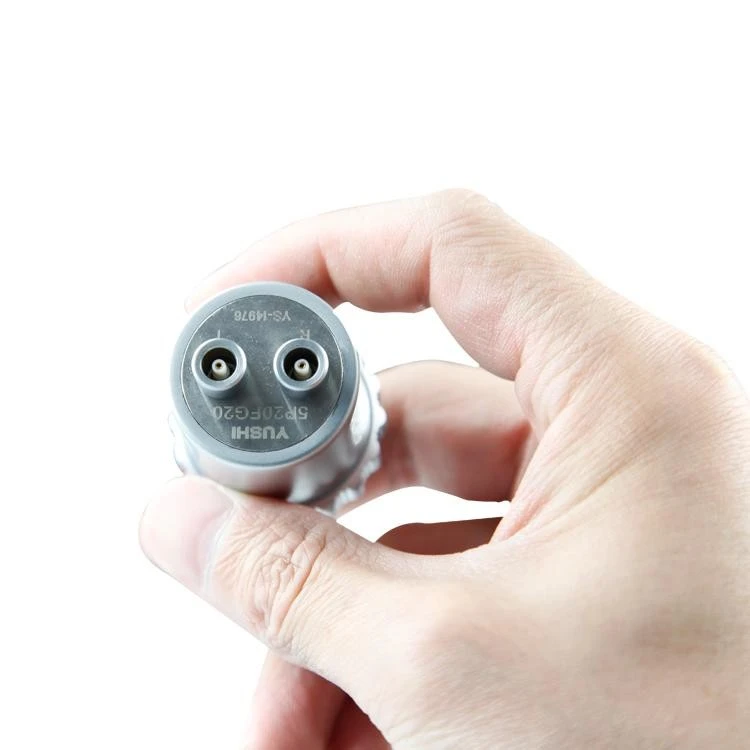

For example, when testing metal components like valves and pipes, ultrasonic probes can be used to detect internal defects, such as porosity, inclusions, and cracks. By sending ultrasonic waves through the material and analyzing the reflected signals, we can identify any defects in the material. This helps to prevent component failures and ensure the safety and reliability of the equipment.
Conclusion
As you can see, ultrasonic probes have a wide range of applications in the oil and gas industry. From pipeline and tank inspection to wellbore integrity assessment, flow measurement, and material testing, these probes are essential for ensuring the safety, efficiency, and reliability of operations in this industry.
If you're in the oil and gas business and are looking for high - quality ultrasonic probes for your operations, I'd love to have a chat with you. Whether you need a Single - element Straight Beam Probe for pipeline thickness measurement or a TOFD Probe And Wedges For Ultrasonic Testing for tank weld inspection, we've got you covered. Don't hesitate to reach out and start a conversation about your specific needs. Let's work together to keep your operations running smoothly!
References
- ASNT (American Society for Nondestructive Testing). "Ultrasonic Testing Handbook."
- API (American Petroleum Institute). "Standards for Pipeline and Tank Inspection."
- IEEE (Institute of Electrical and Electronics Engineers). "Research on Ultrasonic Flow Measurement in Oil and Gas Pipelines."