

Hey there! As an ultrasonic probe supplier, I often get asked whether an ultrasonic probe can be used for detecting leaks in pipes. Well, the short answer is yes, but there's a lot more to it than that, so let's dive in and explore this topic in detail.
First off, let's understand how ultrasonic probes work. Ultrasonic probes are devices that generate and receive ultrasonic waves. These waves have frequencies higher than the upper audible limit of human hearing, typically above 20 kHz. When an ultrasonic wave encounters a change in the medium it's traveling through, such as a crack or a leak in a pipe, part of the wave is reflected back to the probe. By analyzing these reflected waves, we can gather information about the internal structure of the pipe and detect any anomalies.
Now, when it comes to detecting leaks in pipes, ultrasonic probes are pretty handy. Leaking pipes create a distinct ultrasonic signal. When fluid escapes from a pipe under pressure, it creates turbulence at the leak point. This turbulence generates ultrasonic noise that can be picked up by an ultrasonic probe. The probe converts the ultrasonic signals into audible sounds or electrical signals that can be analyzed further.
One of the main advantages of using ultrasonic probes for leak detection is their sensitivity. They can detect even small leaks that might not be visible to the naked eye or detectable by other methods. This is especially useful in industries where even a minor leak can lead to significant losses, such as the oil and gas industry or chemical plants.
Another benefit is that ultrasonic leak detection is non - invasive. You don't have to cut into the pipes or disrupt the normal operation of the system to check for leaks. You can simply place the ultrasonic probe on the outside of the pipe and start the detection process. This saves a lot of time and money compared to traditional methods that might require digging up or disassembling parts of the piping system.
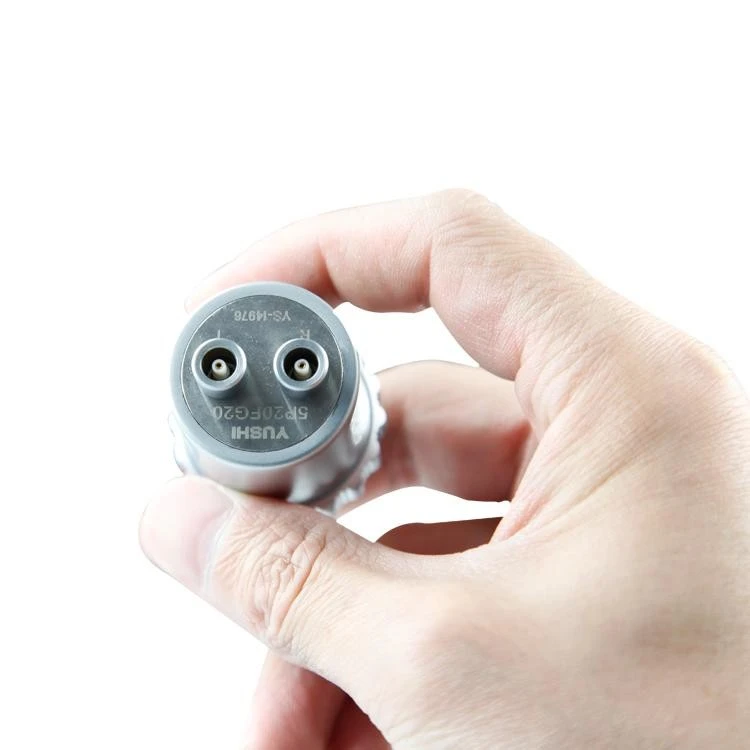

Let's talk about the different types of ultrasonic probes that can be used for leak detection. We have the Single - element Straight Beam Probe. This type of probe emits a straight beam of ultrasonic waves. It's great for detecting leaks in relatively simple pipe structures where the waves can travel in a straight line to the potential leak point and back.
Then there's the Dual - element Straight Beam Probe. As the name suggests, it has two elements. One element emits the ultrasonic waves, and the other receives the reflected waves. This design can improve the accuracy of the detection, especially in pipes with more complex geometries or in situations where there might be interference from other parts of the system.
For more advanced applications, we have the TOFD Probe And Wedges For Ultrasonic Testing. Time - of - Flight Diffraction (TOFD) is a technique that uses ultrasonic waves to detect and size flaws. In the context of pipe leak detection, TOFD probes can provide detailed information about the location and size of the leak, which is crucial for planning the repair process.
However, using ultrasonic probes for pipe leak detection isn't without its challenges. One of the main issues is background noise. In industrial environments, there are often a lot of other sources of ultrasonic noise, such as machinery, motors, and pumps. This background noise can interfere with the signals from the leak, making it more difficult to accurately detect and analyze the leak. To overcome this, we often use special filters and signal - processing techniques to isolate the leak signal from the background noise.
Another challenge is the type of fluid in the pipe. Different fluids have different acoustic properties, which can affect how the ultrasonic waves travel through the pipe and how the leak signals are generated. For example, a gas leak might produce a different ultrasonic signature compared to a liquid leak. So, we need to adjust the settings of the ultrasonic probe and the analysis methods accordingly.
The condition of the pipe itself can also impact the effectiveness of ultrasonic leak detection. If the pipe is covered with a thick layer of insulation or has a lot of corrosion on the surface, it can absorb or scatter the ultrasonic waves, reducing the probe's ability to detect the leak. In such cases, we might need to remove the insulation or use special techniques to compensate for the corrosion.
Despite these challenges, ultrasonic probes remain a powerful tool for pipe leak detection. They offer a cost - effective, non - invasive, and sensitive way to identify leaks in pipes. Whether you're a small business looking to check for leaks in your plumbing system or a large industrial facility managing a complex network of pipes, ultrasonic probes can be a great solution.
If you're interested in using ultrasonic probes for pipe leak detection, we're here to help. We have a wide range of high - quality ultrasonic probes that are suitable for different applications and pipe conditions. Our team of experts can provide you with advice on which probe is best for your specific needs, as well as offer support on installation, calibration, and signal analysis.
So, if you're facing any issues with pipe leaks or just want to be proactive in preventing them, don't hesitate to reach out. Let's start a conversation about how our ultrasonic probes can help you keep your pipes in top shape and save you from potential losses due to leaks.
References
- "Ultrasonic Testing: Principles and Practice" by B. R. Tittmann
- "Non - Destructive Testing Handbook" edited by Robert E. Green